

How to answer customer reviews faster with AI without sounding fake
Turn review replies into a twenty-minute weekly routine by teaching ChatGPT or Claude your voice, editing the drafts by hand, and knowing when not to use AI at all.
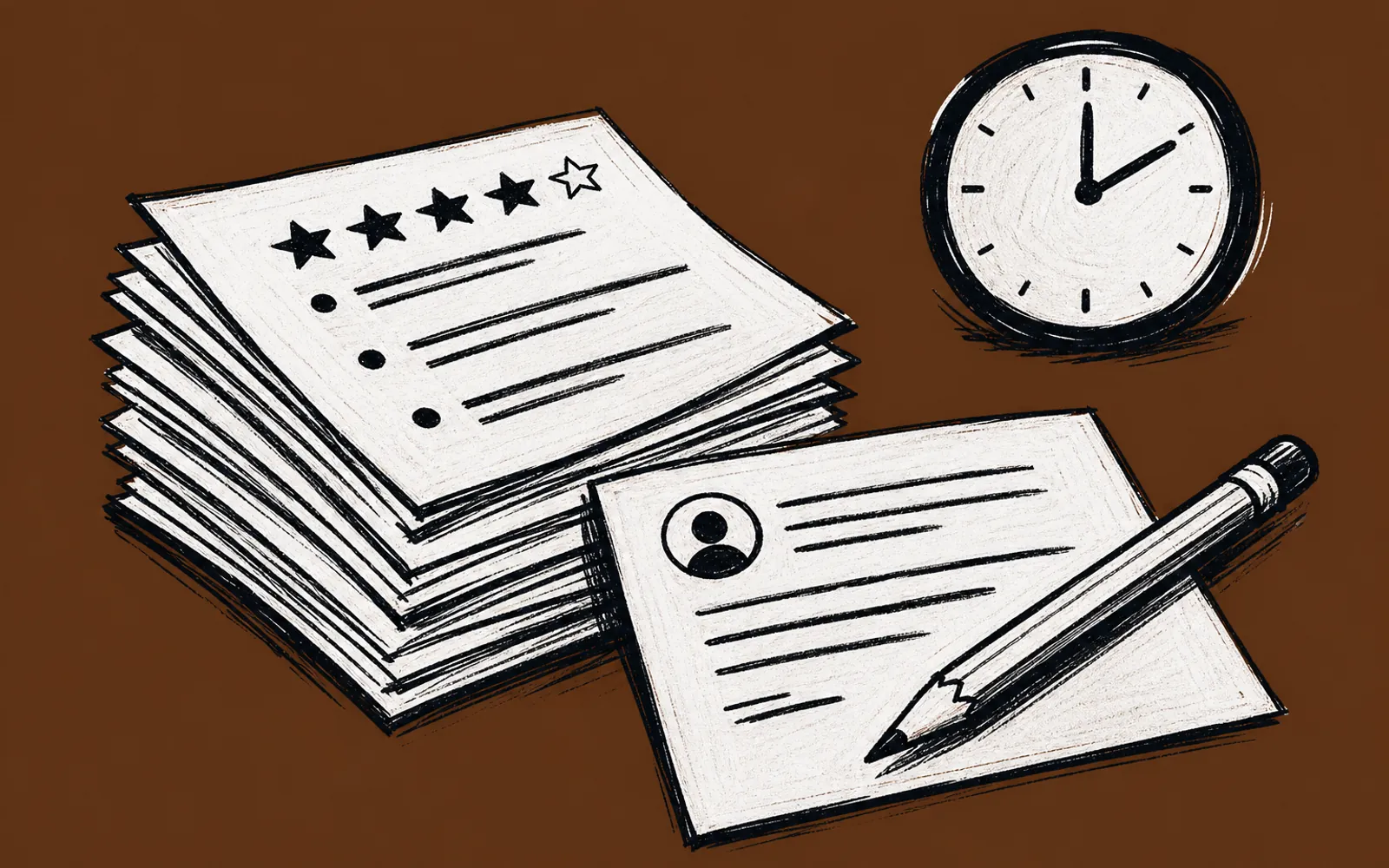

- Paste a short voice-rules block plus the review into ChatGPT or Claude and edit the draft yourself
- A weekly routine of one set block handles most replies in about twenty minutes
- Angry reviews, legal threats and anything with names or health details get a human answer first
- You need one AI subscription and a saved template, nothing else
Monday morning, eleven Google reviews stacked up from the weekend, and the one on top is angry about scheduling. You have a job to run, and answering each one by hand means an hour you do not have, so the replies slip to Wednesday, then to next week, then never.
AI can write the first draft of every reply. The trick is teaching it your voice first, so the drafts need only light edits instead of a rewrite. Here is the routine, the template, and the rules for when to skip AI entirely.
The stakes are not small. Google Search averages over 10 billion searches per day and held an 82.3% share of the search engine market, according to Business of Apps, so the review page a customer lands on is almost certainly Google's. Your replies are the public face of the shop on the platform where most people look first.
What the routine actually does
You paste the review, plus a short block of voice rules, into a chatbot such as ChatGPT or Claude. A chatbot is a program you type back and forth with, in plain sentences, inside your browser. It reads the review, drafts a reply in roughly your style, and you fix two or three words before posting. The whole weekly batch takes about twenty minutes once the template is written.
The part that makes this work is the voice rules. A chatbot with no instructions writes the same generic reply it writes for everyone: thank you for your feedback, we strive for excellence. That is the fake sound owners worry about. A chatbot with five lines about how you actually talk writes something close enough that a ten-second edit makes it yours.
Who this is for, and who it is not for
This is for owners and office managers who answer reviews themselves, get a handful to a few dozen a week, and keep putting it off. Restaurants, contractors, clinics, real estate offices and other local businesses all fit. If you answer fewer than five reviews a month, you probably do not need a routine. If you have staff reviews with legal claims, HR complaints or health details in them, those need a human answer, not a template.
Write your voice rules
- 01Write five voice rules
One page or a notes file: how you greet people, words you never use, your sign-off, reply length, and one thing you always mention.
- 02Paste in three replies you wrote
Real replies you already posted, so the bot can match your actual tone, not your guess at it.
- 03Add a hard rule line
Tell the bot: never apologize more than once, never name customers or staff, never invent details about what happened.
- 04Save it
Keep the block in a note or a saved prompt so you paste the same thing every week.
- 05Test on one old review
Paste an old review you already answered and compare the draft to what you wrote. Adjust the rules until the drafts land close.
A workable voice block might read like this: we are a family-run shop in Columbus, we write two to four sentences, we say thanks by name when the reviewer used one, we never use the word delighted, we sign off with just our first name. Yours will differ. The point is that the bot repeats those rules every single time, which is what keeps twelve replies from sounding like twelve different people.
The twenty-minute weekly routine
- 01Pick a set time
Same block each week, say Tuesday at 8 a.m., so it does not get pushed aside.
- 02Sort the reviews
Put the easy positive ones in one group, the mixed ones in a second, and the angry or complicated ones in a third.
- 03Draft the easy group
Paste voice rules plus review, get a draft, fix a word or two, post it. This is the bulk of the batch.
- 04Draft the mixed ones
For reviews with a real complaint, add one line to your prompt stating what your records show, so the bot does not guess.
- 05Answer the angry ones yourself
Write those by hand or call the customer. AI can polish your wording afterward, but the thinking should be yours.
- 06Note what repeats
If three reviews complain about the same thing, that is an operations problem, not a reply problem.
The weekly time adds up to roughly twenty minutes for a batch of a dozen mixed reviews. Faster weeks happen when the voice rules are dialed in. Weeks with an angry review take longer, and should.
When not to use AI at all
Some replies should never touch a chatbot. Anything a lawyer might later read, anything naming a specific employee, anything with medical information, and any review that accuses your business of something serious. Write those yourself, or call the person. The cost of a stiff reply is nothing next to the cost of a wrong one.
There is also a data habit worth keeping. Do not paste customer names, phone numbers or health details into a chatbot when you can avoid it. Reviews are usually public already, but your internal notes about them are not, and those should stay out of the prompt.
Where hands-on help fits
If setting up the voice rules and the weekly routine sounds like the kind of thing you would rather do with a person, that is the kind of work Ohio AI Lab does. Its AI Concierge is a real team member who learns your business, holds two 1-hour working calls a month on real tasks, and answers questions between calls with no limit, so a review-reply routine like this one gets built on your actual reviews rather than a generic template. Everything starts with a free 25-minute fit call on Zoom, and anything built lives in your own accounts and is yours to keep. There is no public price, and any AI subscription cost is named before anything is bought.