

How to use AI to write job posts and screen applicants for your first hire
A step-by-step way for an Ohio owner with no HR department to draft a clear job description, summarize resumes consistently, and stay inside the legal lines.
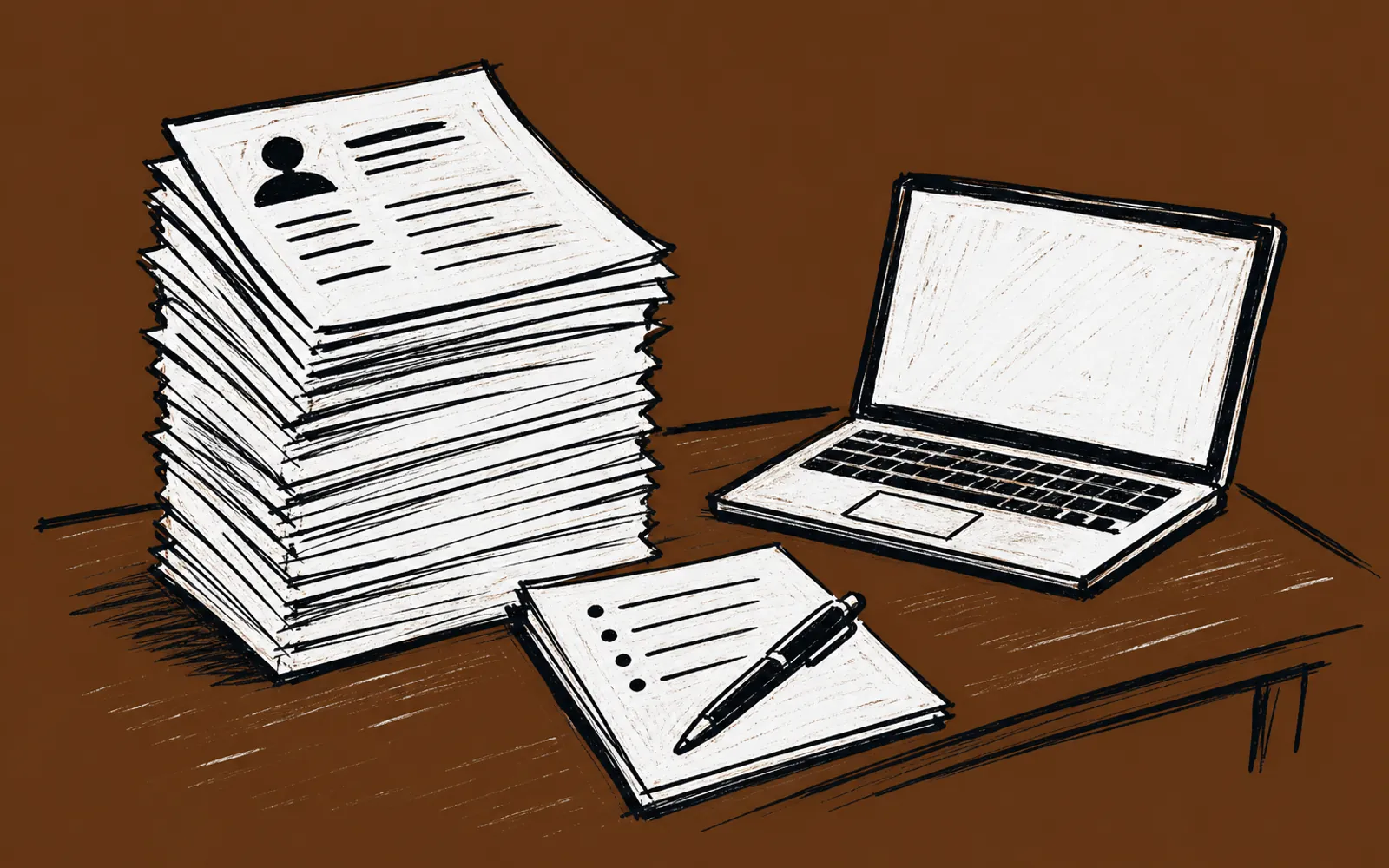
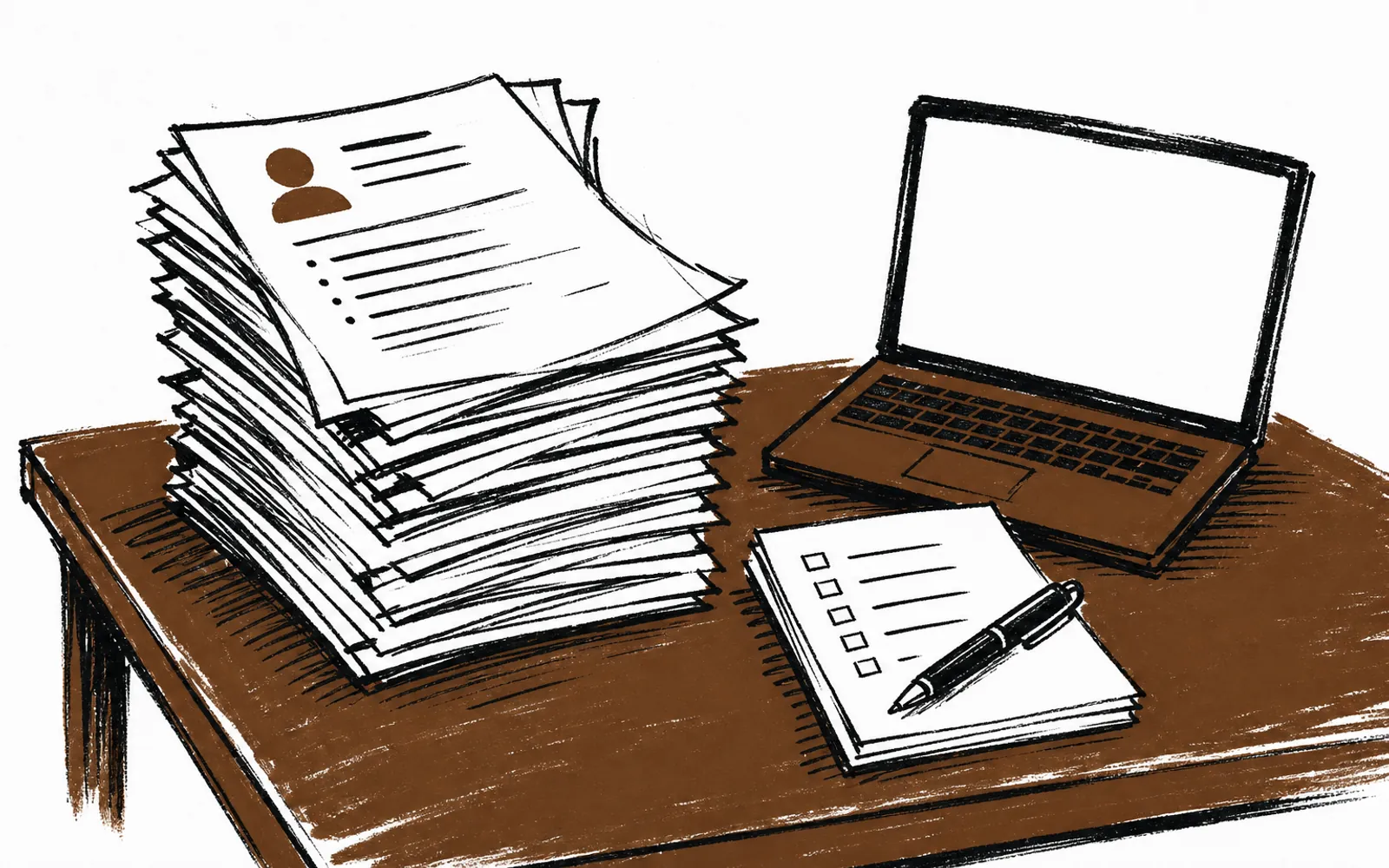
- AI can draft the job post and summarize resumes so the owner keeps only the judgment calls
- The owner writes the requirements first. AI polishes, never decides
- Screen every applicant against the same written checklist to stay consistent and fair
- One AI subscription such as ChatGPT or Claude is enough to start today
It is 9 p.m. and there are eleven resumes on the desk, a job description half written in a notes app, and nobody in the company who has ever hired anyone. That is the moment most Ohio owners meet hiring for the first time. There is no HR department, no recruiter, and no spare evening to learn one. AI can carry the drafting and the summarizing so the owner can focus on the judgment calls that actually need a human.
What AI does here, and what it should never do
AI is strong at two jobs in this process. First, it turns a rough list of duties into a clear, readable job post. Second, it summarizes each resume against the same requirements, so eleven applicants can be compared on the same page instead of gut feeling at midnight. Both save the owner hours of typing and rereading.
AI should never make the hiring decision. It reads patterns, and patterns can carry bias the owner did not intend. The owner reads the summaries, checks them against the actual resumes, and makes every yes and no personally. That split, AI drafts and summarizes while the human decides, is the whole method.
Who this is for
This is for owner-led businesses in Cincinnati and across Southwest Ohio hiring their first employee: a contractor adding a helper, a clinic adding a front-desk person, a restaurant adding a line cook. If there is already an HR person and a documented hiring process, most of this exists in the building already. If the owner is the HR department, this is the fastest way through.
Step one: write the requirements before touching AI
The owner starts with a plain list, written alone, of what the person must do every week and what must be true on day one. Drivers license or not, weekends or not, customer-facing or not. This list is the anchor. Everything AI produces later gets measured against it, and anything AI invents that is not on the list gets deleted.
- 01List the real work
Write five to eight weekly duties and any day-one requirements in plain words, without AI.
- 02Open a chat and give it the anchor
Paste the list into ChatGPT or Claude with the role title and the town.
- 03Ask for a plain draft
Prompt: "Write a job post for a [role] at a small [industry] business in [city], Ohio. Use only the duties and requirements I list. Plain language, no jargon, under 300 words."
- 04Strip what it invented
Delete any requirement, benefit, or perk that was not on the original list. AI tends to add things.
- 05Read it aloud
If a sentence would not survive being said to a candidate on the phone, rewrite it.
- 06Post it in one or two places
Pick one job board and the company's own page or social account, and use the same text everywhere.
Step two: screen every applicant the same way
The fairness problem in a first hire is not bad intent, it is drift. Applicant four gets read carefully at 2 p.m., applicant eleven gets skimmed at 11 p.m. The fix is a written checklist and one consistent prompt. Every resume gets the same treatment, which also gives the owner a paper trail showing why each person advanced or did not.
- 01Fix the checklist first
Turn the day-one requirements into three to five yes-or-no questions, such as "has a valid Ohio driver's license."
- 02Paste one resume per chat
Prompt: "Summarize this resume against these requirements: [list]. For each requirement answer yes, no, or not stated, and quote the line that supports it. Do not add opinions."
- 03Keep the yes-or-no grid
Save each summary in one document so all applicants sit on the same page.
- 04Verify before deciding
For anyone who advances, open the actual resume and confirm the key claims. AI summaries can miss context or misread a date.
- 05Decide as the owner
Rank from the grid, then interview the top few. No applicant is rejected or advanced by AI alone.
The Ohio legal lines to watch
A few rules of thumb keep a first hire out of trouble. Keep the job post about the work: duties, schedule, location, and requirements. Leave out anything about the applicant's age, family plans, health, or anything else not tied to the job. The same applies to interview questions and to the prompts, since a biased prompt produces a biased summary.
Consistency is the other line. Every applicant should face the same requirements, the same questions, and the same process. The written checklist from step two is what makes that true and provable. When in doubt on a specific legal question, an hour with an Ohio employment attorney costs less than one hiring mistake, and no AI tool replaces that advice.
Where training fits
Once the first hire works out, hiring tends to become a team job, and the AI habits around it can spread. Ohio AI Lab runs AI Training for Business, a hands-on session on Zoom built on the team's approved real work, sized for one owner or a whole staff, with take-home routines and safe-use ground rules. It fits once the basics above are working and the owner wants the same skill across the company. Everything starts with a free 25-minute fit call that looks at two recurring tasks and picks a first result worth having.