

What Cleveland professional services firms are doing with AI that their competitors are not yet
Audit evidence review, labor law research and design collaboration are already running on AI in Northeast Ohio. The difference for everyone else is a working plan, not the tools.
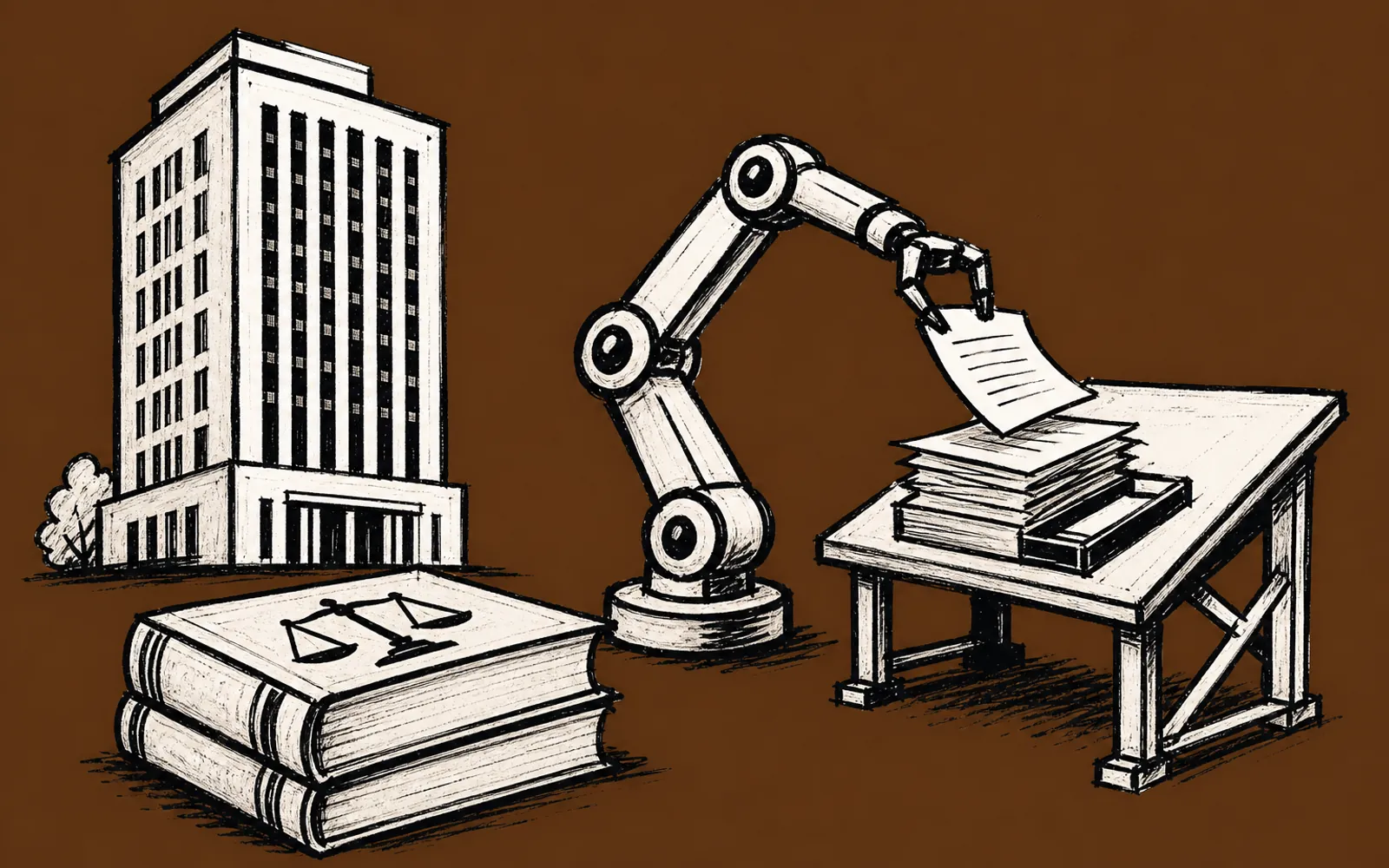
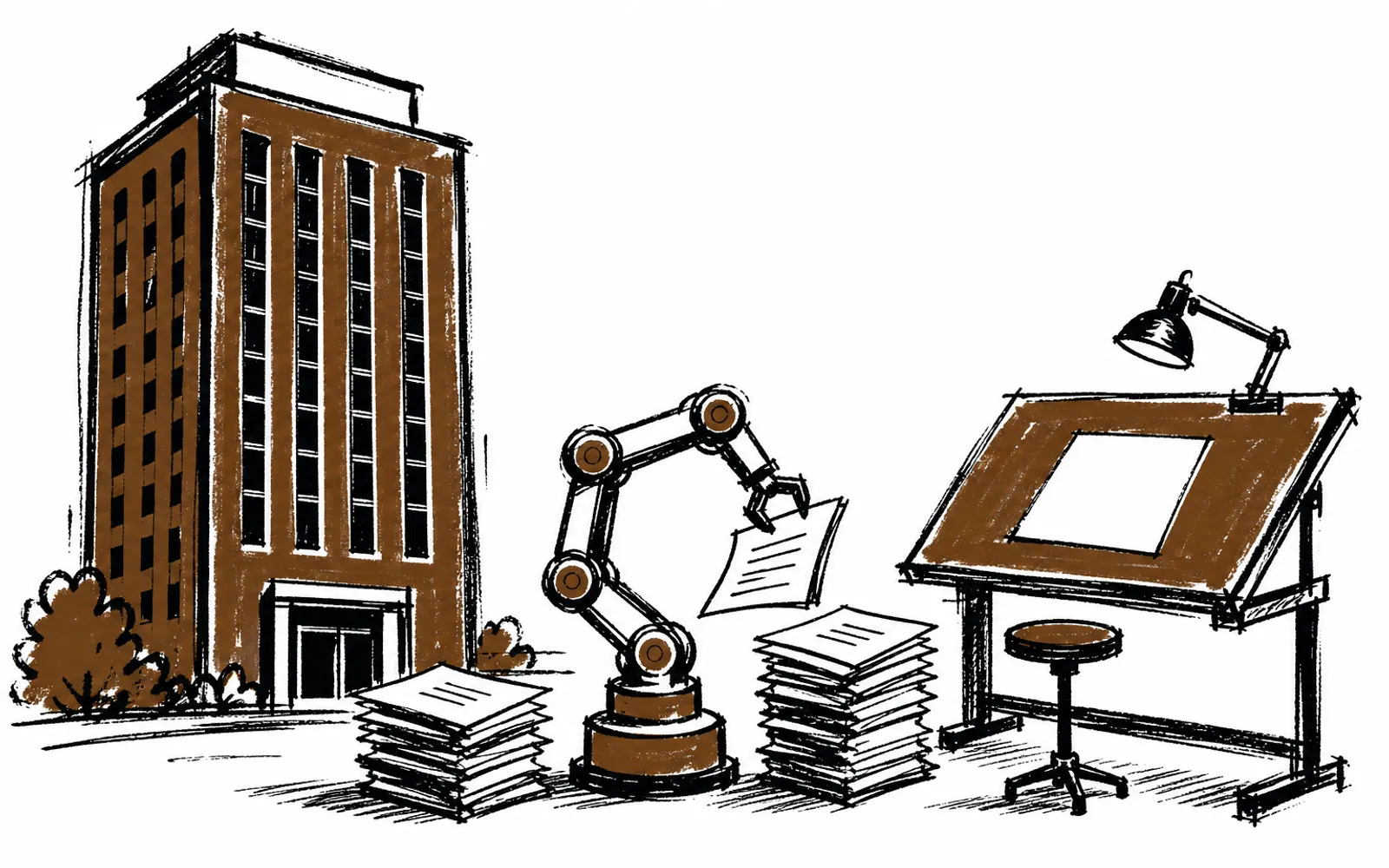
- A Cleveland CPA firm uses AI with document scanning to automate large parts of audit evidence review
- Law firm Vorys built its own AI platform for federal, state and local employment law questions
- Cleveland architectural firm Vocon uses AI-assisted modeling software for design and code compliance work
- Firms getting value pick recurring tasks and measure what changed, rather than running one-off experiments
A partner at an accounting, law, consulting or insurance firm in Northeast Ohio hears it at a conference or over lunch. A peer firm is already using AI on real work. Back at the office, the honest answer is that the firm has run a few experiments nobody relies on, and nobody can name a task that actually changed. This article looks at what firms nearby are doing with AI right now, and how to start.
What is already running in Northeast Ohio
A 150-person regional CPA firm based in Cleveland implemented a tool that combines Optical Character Recognition with artificial intelligence to automate large portions of its audit evidence review workflow. OCR, in plain words, converts scanned documents and images into machine-readable text so AI can analyze their contents. The firm described the change at a Las Vegas FinTech conference in March 2025, where Tim Porter, a CPA and CISA at the firm, found that conversations with industry leaders kept turning to how AI was creating advantages in audit efficiency and quality.
On the legal side, Vorys developed AIV Labor, an agentic generative AI product designed to answer questions about federal, state and local employment laws. Agentic means the software can carry out a multi-step task on its own rather than only answering one prompt at a time. Chaz Billington, a partner in the firm's labor and employment group, told Crain's Cleveland Business the product grew out of the firm's exploration of AI applications and that it is entirely proprietary rather than a tailored use of an established platform such as ChatGPT. Vorys is based in Columbus but has a significant presence in Northeast Ohio.
Liner Legal, a disability law firm based in Cleveland, took a third path. It had an outside team build a multi-stage system that processes medical documentation: it filters out irrelevant pages, splits large PDFs into logical blocks, and summarizes each block with dates, doctor names and facilities. Every item in the final report links to the specific page in the original document, so the attorney can click through and verify the information. The system also classifies cases by category from the medical records and suggests which partner to refer a case to when it does not fit the firm's specialty.
Design firms are in too. Vocon, a Cleveland architectural design firm, uses AI-assisted modeling software for design work, collaboration, documentation and code compliance. Its architects start with team conversations about a project, plug that information into prompt-based modeling software, then refine the AI-produced models and apply building materials such as brick, glass and wood siding to produce life-like renderings for client feedback. The firm's exploration of AI began years ago, when its technology director started looking into the potential uses and abuses of the tools.
What separates firms getting value from firms dabbling
The pattern across these examples is not a bigger budget. The CPA firm picked one painful workflow, audit evidence review, and rebuilt it around a tool. Liner Legal started with one specific pain point, the need to work with medical documentation quickly and accurately, and expanded from there. Vocon spent years exploring what the tools could and could not do. Each firm committed to a repeating task that somebody did every week, not a demo.
That gap is the real story. Dabbling with AI looks like a partner trying a chatbot once, a document nobody trusts, and no change to the week. Getting value looks like a named task, a person who owns it, and a before-and-after you can describe in one sentence, such as hours saved on evidence review or summaries that link back to the source page.
How to pick your first task without buying anything
You do not need a platform like AIV Labor to start. Every firm in these examples began with work it already had. Walk your own week with this question: which task repeats, eats hours, and produces text someone has to review anyway? For most professional services firms that is meeting notes, client letters, document summaries or first-draft engagement letters.
- 01List the repeating tasks
Write down every task in a typical week that produces text somebody reviews, such as notes, letters and summaries.
- 02Pick one with a checkable output
Choose a task where a person verifies the result anyway, so the AI draft never goes out unreviewed.
- 03Time the current version
Do the task the normal way once and note how long it takes. You cannot show improvement without a baseline.
- 04Run the AI draft next to it
Use a general AI assistant on the same task the following week and compare the two outputs side by side.
- 05Set the ground rules
Decide now what client information may and may not go into the tool, and write it down for the team.
- 06Keep it or drop it
After a month, keep the workflow only if the time saved and quality hold up. Then pick the next task.
For a busy firm that wants a working plan instead of more reading, Ohio AI Lab offers two paths. AI Concierge puts one of its people with the owner for two 1-hour working calls a month on real tasks, with voice messages and email between calls. AI Training for Business runs hands-on sessions built on the team's approved real work, with take-home routines and safe-use ground rules. The first step is a free 25-minute fit call on Zoom.